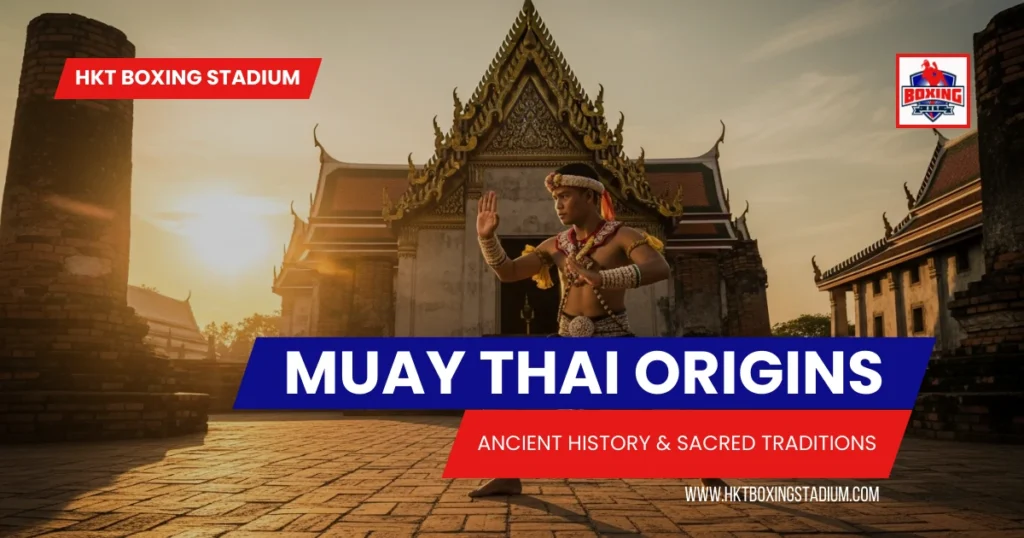
Ancient battlefield necessity transformed into Thailand’s national sport through centuries of cultural evolution. Muay Thai traces roots deep into Siamese military history, where survival demanded mastery of the human body as weapon. Traditional ceremonies and spiritual foundations continue honoring warriors who shaped this martial art into living cultural heritage.
The journey from ancient combat technique to modern sporting spectacle reveals Thailand’s resilience and cultural pride. Sacred rituals performed before every fight connect contemporary athletes to ancestors who fought for kingdom survival. Understanding Muay Thai origins illuminates why this martial art transcends sport, embodying Thai identity through movement, music, and unwavering respect for tradition.
Battlefield Origins of Muay Thai
Ancient Siamese Warfare
The Sukhothai Kingdom witnessed the birth of organized Muay Thai training around the 13th century. Military commanders recognized hand-to-hand combat could determine battle outcomes when weapons failed or broke. Soldiers trained relentlessly in using fists, elbows, knees, and shins as natural weapons against armed opponents.
Early Siamese warriors studied Krabi-Krabong, the sword and staff fighting system that dominated military training. When disarmed during close combat, fighters adapted these weapon movements to empty-hand techniques. The circular motion of a staff strike became the devastating roundhouse kick. Sword thrusts transformed into straight punches and elbow strikes.
Training camps emerged throughout the kingdom as warfare necessitated armies skilled in multiple combat forms. Young men learned to harden shins against bamboo, condition fists on sand bags, and develop the explosive power needed for battlefield effectiveness. These camps became the first Muay Thai gyms, establishing training traditions that continue today.
Evolution from Muay Boran

Muay Boran encompassed the complete system of ancient Thai martial arts before modern rule codification. Regional variations developed distinct characteristics based on geographic influences and local fighting philosophies. Each style emphasized different techniques while maintaining core principles of using eight limbs as weapons.
The northern regions developed Muay Thasao, characterized by swift footwork and high kicks suited to mountainous terrain. Southern provinces refined Muay Chaiya, favoring defensive postures and devastating counter-strikes. Northeastern fighters created Muay Korat, emphasizing raw power and aggressive forward pressure. Central Thailand’s Muay Lopburi balanced all elements, creating a comprehensive fighting system.
These regional styles competed and cross-pollinated during festivals and military demonstrations. Fighters traveled between provinces, absorbing techniques and refining approaches. The most effective methods survived, gradually forming the technical foundation of modern Muay Thai while preserving the essence of each regional tradition.
Royal Patronage & Cultural Significance
King Naresuan the Great earned legendary status for exceptional Muay Thai skills during the late 16th century. Historical accounts describe his victories over Burmese fighters, including a famous single combat that allegedly prevented full-scale warfare. Royal interest elevated Muay Thai from peasant pastime to respected martial art practiced by nobility.
Successive kings maintained strong connections to Muay Thai, sponsoring tournaments and supporting training camps. Royal patronage brought resources, prestige, and cultural legitimacy to the art. Fighters who impressed royalty gained titles, land grants, and honored positions within the military structure.
This royal connection established Muay Thai as integral to Thai cultural identity. Fighting camps flourished near palaces, attracting the most talented practitioners. Standards rose as competition intensified, creating the excellence tradition that defines Muay Thai today. Royal tournaments became major cultural events, drawing crowds from all social classes.
Sacred Traditions & Spiritual Foundations
Wai Kru Ram Muay Ceremony

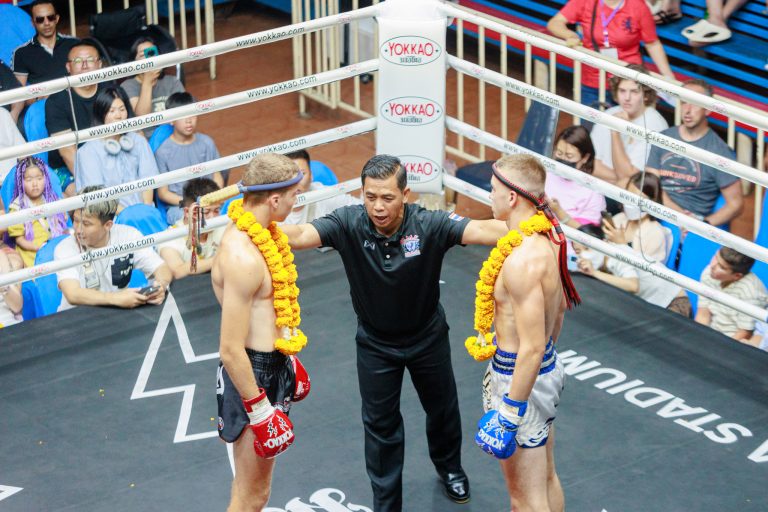
Pre-fight rituals connect modern fighters to centuries of martial tradition through the Wai Kru Ram Muay ceremony. Fighters circle the ring counterclockwise, pausing at each corner to offer prayers for protection and success. The ritualized dance pays homage to teachers, parents, and the Buddha, acknowledging debts owed to those who transmitted knowledge.
Sarama music accompanies the ceremony, featuring the piercing Pi Java oboe and driving Klong Khaek drums. The hypnotic rhythms establish fight atmosphere while allowing fighters to warm up muscles and calm pre-fight nerves. Each fighter’s Ram Muay tells personal stories, often referencing legendary warriors or mythological characters from Thai literature.
The ceremony serves practical purposes beyond spiritual significance. Trainers assess their fighter’s mental state through Ram Muay performance. Judges observe grace and balance as indicators of technical skill. Opponents study each other’s movements, seeking psychological advantages before combat begins. Modern Muay Thai maintains this tradition even in international competitions, preserving cultural authenticity.
Mongkol & Prajioud: Sacred Ritual Items

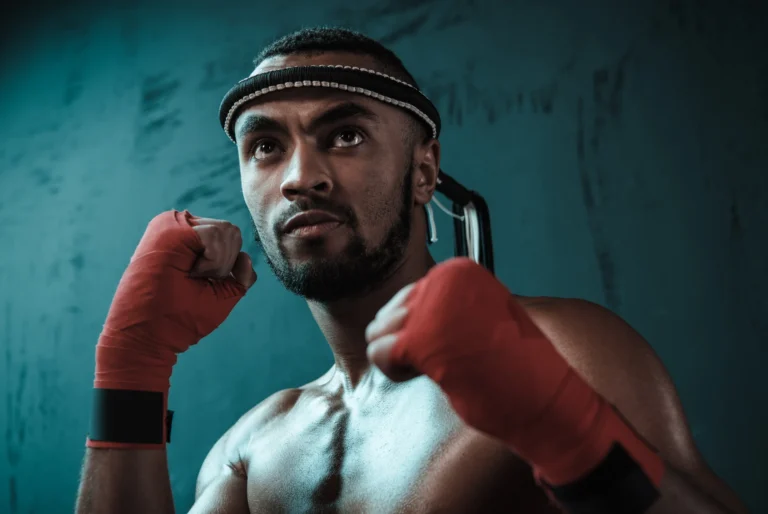
Buddhist monks bless the Mongkol headband before fighters wear it into the ring. Trainers carefully handcraft each Mongkol, weaving sacred threads with prayers and protective symbols. The headband represents the fighter’s connection to their gym, teacher lineage, and spiritual protection during combat.
Prajioud armbands carry equally deep significance, traditionally fashioned from cloth belonging to the fighter’s mother. The practice symbolizes maternal protection and family honor riding on the fighter’s performance. Color variations indicate rank and gym affiliation, allowing spectators to identify fighters’ origins and experience levels.
Removal of the Mongkol marks the transition from ceremony to combat. Trainers perform this task with reverence, whispering final instructions and blessings. The sacred items remain ringside throughout the fight, serving as spiritual anchors. Fighters who win often raise the Mongkol overhead in victory, honoring traditions while celebrating personal triumph. HKT Boxing Stadium maintains these authentic rituals during all professional fights, offering visitors genuine cultural experiences.
Sarama Music & Cultural Atmosphere

Traditional instruments create the unmistakable soundscape of authentic Muay Thai. The Pi Java produces wailing melodies that rise and fall with fight intensity. Klong Khaek drums pound steady rhythms, accelerating as action intensifies inside the ring. Ching cymbals add metallic accents, punctuating significant strikes and knockdowns.
Musicians respond to fight dynamics, adjusting tempo and volume based on action. Slow, methodical rhythms accompany technical exchanges and strategic maneuvering. Tempo increases dramatically when fighters exchange heavy blows or aggressive combinations. The music becomes part of the fight itself, influencing pace and atmosphere while honoring centuries-old traditions.
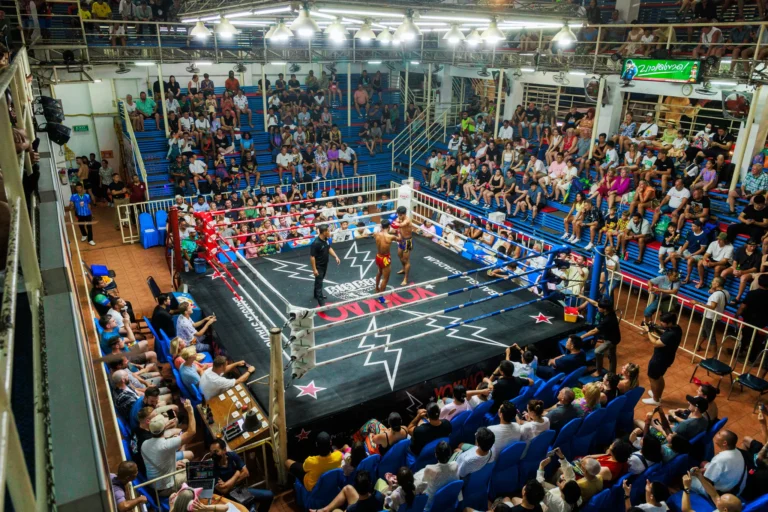
Modern stadiums preserve live Sarama performances despite technological alternatives. The authentic experience transports audiences to historical roots while watching contemporary athletes compete. Bangla Boxing Stadium and Patong Boxing Stadium maintain traditional musical standards, ensuring visitors experience Muay Thai as Thai people have for generations. The cultural immersion distinguishes authentic Muay Thai from sanitized tourist entertainment.
Evolution from Ancient Art to Modern Sport
18th-19th Century Codification
The Rattanakosin era brought systematic rules to previously chaotic Muay Thai competitions. King Rama I through Rama V progressively formalized the sport while preserving traditional elements. Hemp rope hand wraps gave way to cotton and eventually boxing gloves, reducing hand injuries and allowing fights to continue longer.
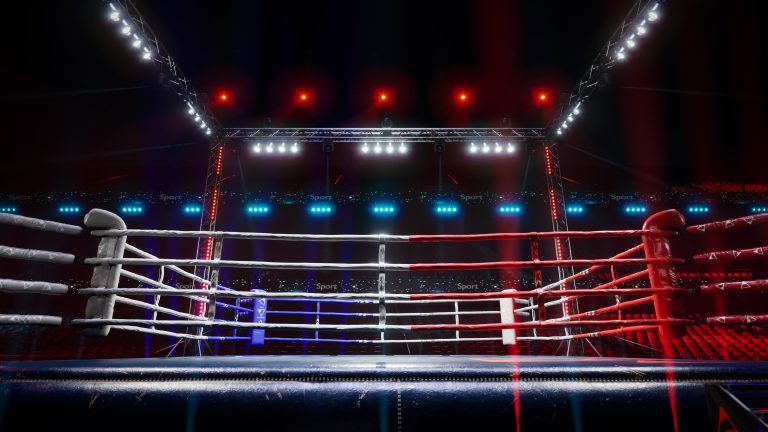
Weight divisions emerged during King Chulalongkorn’s reign, ensuring fairer competition between fighters of similar size. Timed rounds replaced unlimited duration bouts where fighters continued until one could no longer defend themselves. Boxing rings with ropes and elevated platforms replaced simple rope circles laid on the ground.
These modernizations made Muay Thai safer and more sustainable as sporting competition. Fighters could train longer careers with reduced injury risks. Standardized rules allowed regional styles to compete fairly, accelerating technical evolution. The changes preserved Muay Thai’s essential character while adapting to modern sporting sensibilities.
20th Century Modernization
Rajadamnern Stadium opened in 1945, providing permanent venue for professional Muay Thai in Bangkok. The stadium’s establishment marked Muay Thai’s full transition into modern sporting institution. Five years later, Lumpinee Stadium followed, creating Thailand’s most prestigious fighting venues.
International rules adopted from Western boxing integrated with traditional Muay Thai elements. The five-round format became standard for championship fights. Point scoring systems rewarded effective striking, defense, and ring control. Judges at ringside replaced reliance on crowd reaction or royal decree.
The Sport Authority of Thailand formed to govern Muay Thai nationwide. Official rankings emerged, championships gained prestige, and fighter purses increased substantially. Television broadcasts brought Muay Thai to rural areas, expanding the sport’s popularity beyond Bangkok. Professional fighting became viable career path for talented athletes from all regions.
Contemporary Muay Thai Scene
International organizations now sanction Muay Thai competitions across six continents. The sport gained Olympic recognition, validating its global significance. Major promotions broadcast fights worldwide, introducing millions to Thailand’s national art. Professional fighters from over 100 countries train and compete in Muay Thai.
Mixed martial arts adoption of Muay Thai techniques demonstrated effectiveness against other fighting styles. Elite MMA fighters regularly train in Thailand, seeking authentic instruction from traditional camps. This cross-pollination elevated Muay Thai’s reputation while preserving traditional training methods.
Modern Phuket stadiums offer professional Muay Thai in tourist-accessible venues. HKT Boxing Stadium presents authentic fights featuring professional Thai and international fighters. Evening shows combine traditional ceremonies with high-level competition, providing cultural education alongside entertainment. Visitors experience living martial tradition continuing to evolve while honoring ancient roots.
Regional Styles & Fighting Techniques
Traditional Fighting Styles
Muay Chaiya practitioners from southern Thailand emphasize defensive mastery and devastating counters. The style features low, stable stances making fighters difficult to knock down. Elbows and knees dominate the striking arsenal, deployed with precision timing as opponents commit to attacks. Defense-first mentality creates patient fighters who control fights through superior positioning.
Muay Korat from the Isaan plateau produces powerful, aggressive fighters who pressure opponents relentlessly. The style favors straight-line attacks combining punches and low kicks to wear down resistance. Buffalo-like charging earned Korat fighters their reputation for toughness and forward momentum. Raw power over technical finesse characterizes this northeastern approach.
Muay Lopburi from central Thailand represents balanced fighting incorporating elements from all regional styles. Practitioners adapt strategies based on opponent weaknesses, switching between aggressive and defensive modes. The versatile approach produced many champions who succeeded against specialists from other regions. Modern Muay Thai draws heavily from Lopburi principles.
The Art of Eight Limbs
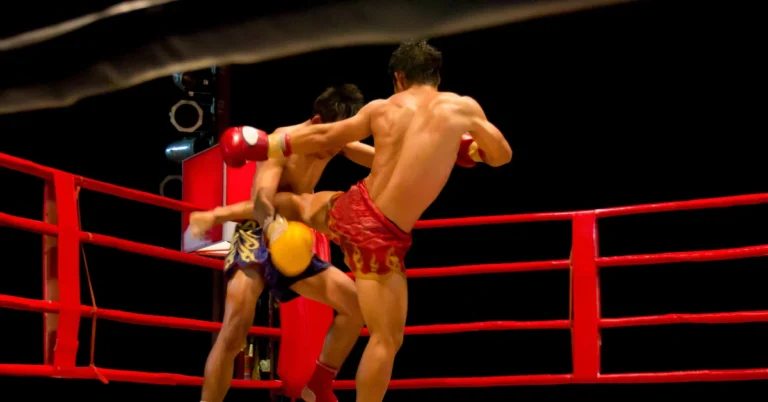
Muay Thai’s distinctive use of eight contact points separates it from other striking martial arts. Fists deliver rapid combinations and knockout power at medium range. Elbows cut opponents at close distance, causing fights to stop from excessive bleeding. Knees devastate the body and head during clinch exchanges.
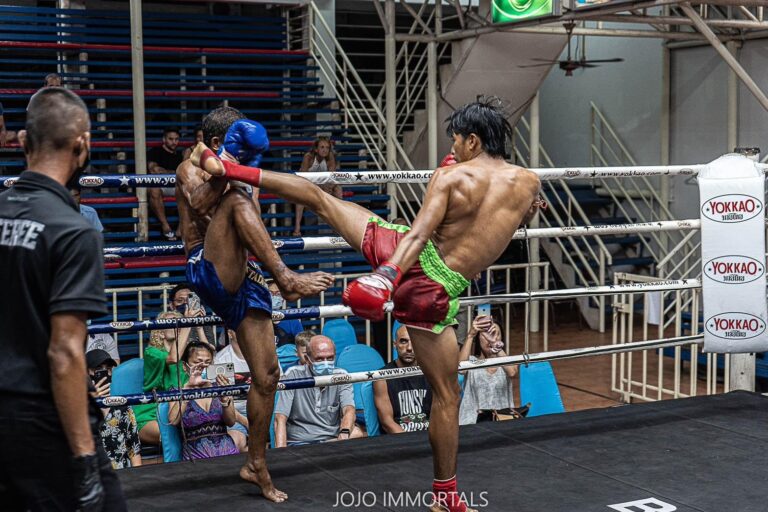
Kicks, delivered with shin rather than instep, generate tremendous impact force. The roundhouse kick targets ribs, thighs, and head with equal effectiveness. Push kicks control distance and disrupt opponent rhythm. The variety of striking weapons creates constant threat, forcing opponents to defend multiple angles simultaneously.
Effective integration of all eight weapons defines skilled practitioners. Attacks flow seamlessly between ranges as fighters close distance or create space. Punches set up kicks, kicks enable clinch entries, and the clinch delivers knees and elbows. The system’s completeness makes Muay Thai devastatingly effective against fighters trained in more limited striking arts.
Traditional Training Methods
Ancient conditioning techniques still form the foundation of modern Muay Thai training. Roadwork builds cardiovascular endurance necessary for five-round fights. Fighters run before dawn, covering distances that strengthen legs while developing mental toughness through early morning discipline.
Shin conditioning occurs gradually through repeated heavy bag work and Thai pad training. The process micro-fractures bone, which heals stronger and denser. Traditional methods avoided direct shin-to-shin contact until fighters developed sufficient bone density. Modern understanding of progressive overload validates these time-tested approaches.
Pad work with experienced trainers develops timing, accuracy, and power. Trainers call combinations dynamically, forcing fighters to react rather than memorize sequences. The interactive training simulates fight conditions more effectively than solo bag work. Daily pad sessions lasting 30-45 minutes form the core of skill development. Visitors watching training sessions at authentic gyms witness these centuries-old methods still producing world-class fighters.
Cultural Significance in Modern Thailand
National Identity & Pride
Muay Thai embodies Thai cultural values of respect, perseverance, and spiritual awareness. The mandatory Wai Kru ceremony before fights demonstrates respect for teachers and traditions. Fighter conduct inside and outside the ring reflects on gym reputation, family honor, and Thai culture broadly.
Government support maintains Muay Thai’s prominent cultural role through funding, regulation, and international promotion. The Tourism Authority of Thailand markets Muay Thai as essential Thai experience, drawing millions of visitors annually. Economic impact extends beyond fight purses to equipment manufacturing, gym tourism, and cultural exports.
The Thai government nominated Muay Thai for UNESCO Intangible Cultural Heritage recognition, validating its global cultural significance. The designation process acknowledges Muay Thai’s role in Thai identity formation and cultural transmission across generations. International respect for Muay Thai contributes to Thailand’s soft power and cultural influence worldwide.
Experiencing Authentic Muay Thai

Authentic Muay Thai exists in working gyms where fighters train seriously and professional stadiums presenting legitimate competition. Tourist shows featuring choreographed techniques lack the intensity and cultural context of real fights. Distinguishing authentic experiences from entertainment requires understanding traditional elements.
Genuine venues perform complete Wai Kru ceremonies before every fight. Live Sarama music accompanies bouts rather than recorded soundtracks. Fighters compete seriously for purses and rankings rather than entertaining tourists with staged outcomes. The atmosphere combines sporting excitement with cultural gravitas.
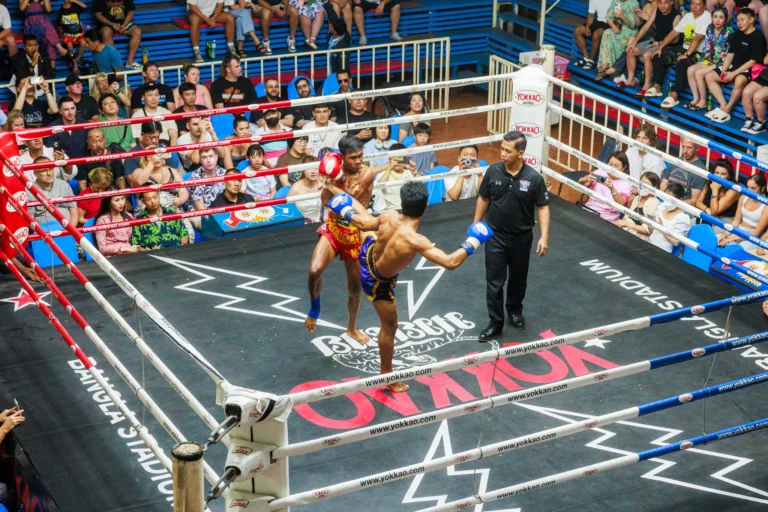
HKT Boxing Stadium prioritizes authenticity in all presentations. Professional fighters train rigorously and compete legitimately for victories that affect rankings and careers. Traditional ceremonies receive proper reverence rather than rushed performance. Modern stadium facilities provide comfort while maintaining cultural integrity. Bangla Boxing Stadium hosts professional cards seven nights weekly, featuring eight authentic competitive bouts each evening. Patong Boxing Stadium offers similar programming with English commentary explaining cultural significance to international audiences.
Conclusion
Muay Thai’s evolution from battlefield necessity to cultural treasure demonstrates Thailand’s ability to honor tradition while embracing progress. Ancient fighting techniques refined through centuries of warfare became sporting competition without losing spiritual significance. Modern practitioners connect to warrior ancestors through daily training and pre-fight rituals.
The sacred art of eight limbs continues captivating audiences through powerful striking combined with profound cultural depth. Traditional music, ceremonial dances, and spiritual preparations distinguish Muay Thai from purely athletic competition. Understanding historical origins enhances appreciation for the complete cultural experience.
Professional stadiums in Phuket provide accessible opportunities to witness living martial tradition. HKT Boxing Stadium maintains authentic standards while offering premium facilities for international visitors. Evening shows combine high-level athletic competition with traditional ceremonies, educating audiences about Thailand’s most significant cultural export.
Experience centuries of martial heritage at Phuket’s premier Muay Thai venues. Bangla Boxing Stadium presents nightly professional fights featuring traditional Wai Kru ceremonies and authentic competition. Patong Boxing Stadium offers equally authentic Muay Thai with English commentary helping visitors understand cultural context. Book tickets directly for 5% discount and guaranteed seating at either venue.