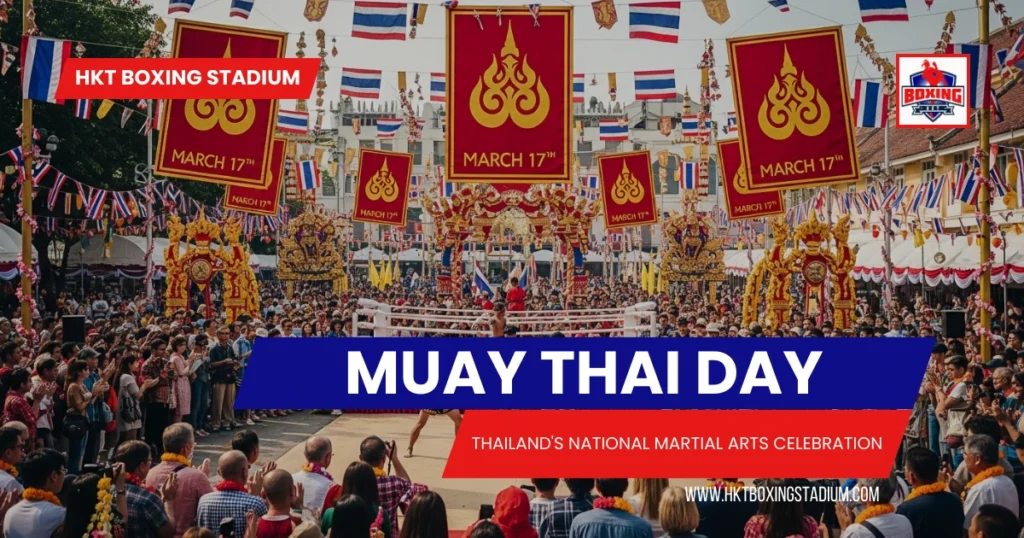
March 17th marks Muay Thai Day, Thailand’s official celebration honoring the nation’s most revered martial art and cultural treasure. The annual observance commemorates legendary fighter Nai Khanom Tom’s historic victory over Burmese opponents in 1774, symbolizing Thai resilience and martial excellence. Nationwide festivities showcase traditional Muay Thai through ceremonies, demonstrations, and cultural programs preserving ancient fighting traditions.
The designation as national holiday reflects Muay Thai’s profound significance in Thai identity and cultural heritage. Government institutions, martial arts organizations, and training camps coordinate celebrations from Bangkok’s premier stadiums to provincial communities nationwide. The observance educates new generations about martial traditions while honoring masters who dedicated lives to preserving and transmitting this sacred art.
International recognition of Muay Thai Day extends Thai cultural influence globally as practitioners worldwide participate in coordinated celebrations. The growing observance demonstrates how Thailand’s national sport transcends borders, uniting diverse communities through shared appreciation for martial excellence and cultural authenticity. Understanding Muay Thai Day’s origins and contemporary celebrations reveals the martial art’s living connection to Thai national identity.
Historical Significance of March 17th

Nai Khanom Tom’s Legendary Victory
The year 1774 witnessed one of Thai martial history’s most celebrated moments during Burmese King Mangra’s reign. Nai Khanom Tom, captured Thai boxer held as prisoner of war, received opportunity to fight for freedom during festivities honoring Burmese guardian spirit. The Burmese king arranged boxing matches between Thai prisoners and Burmese fighters, confident in his champions’ superiority over captured enemies.
Nai Khanom Tom performed the Wai Kru Ram Muay ceremony before fighting, confusing Burmese spectators unfamiliar with Thai martial traditions. The ritualized dance demonstrated respect for teachers and invoked spiritual protection, establishing cultural authenticity before combat began. His insistence on traditional ceremony despite captivity circumstances revealed deep commitment to martial art’s spiritual foundations transcending mere fighting technique.
The legendary fighter defeated ten Burmese opponents consecutively without rest periods, demonstrating Muay Thai’s devastating effectiveness and Thai warrior spirit. Each victory showcased different techniques—powerful kicks, precise elbow strikes, crushing knee attacks—proving the Art of Eight Limbs’ comprehensive superiority. The Burmese king, impressed by extraordinary skill and indomitable spirit, granted Nai Khanom Tom freedom and riches, acknowledging Thai martial excellence.
Historical accounts debate precise details, with some versions claiming nine opponents while others specify ten consecutive victories. Regardless of exact numbers, Nai Khanom Tom’s triumph became powerful symbol of Thai cultural pride and martial superiority. The story’s endurance through centuries demonstrates its importance in Thai national consciousness, teaching values of courage, skill, and cultural dignity maintained even during imprisonment.
Official Recognition & Modern Observance
Thailand celebrates two official Muay Thai Days annually, each honoring different aspects of the martial art’s rich heritage. February 6th commemorates King Sanphet VIII (Phra Chao Sua), the “Tiger King” who practiced Muay Thai and promoted the art among his soldiers during his reign from 1703-1709. This date, officially declared in 2011, celebrates royal patronage and Muay Thai’s historical ties to Thai monarchy.
March 17th represents the more widely celebrated National Muay Thai Day, designated in 1995 to honor Nai Khanom Tom’s legendary victories. Though historical records cannot verify the exact 1774 date, the symbolic designation matters more than historical precision, providing focus for annual celebrations honoring Thai martial heritage and the warrior spirit exemplified by the “Father of Muay Thai.”
Government support through the Ministry of Culture and Tourism Authority of Thailand elevates both observances beyond simple sports celebrations into cultural preservation efforts. Official programs include educational initiatives teaching youth about martial traditions, preservation projects documenting ancient techniques, and international promotion showcasing Thai cultural heritage. The coordinated approach ensures Muay Thai traditions transmit to future generations while gaining global recognition.
The March 17th observance gained momentum throughout the late 1990s and 2000s as Thailand increasingly leveraged Muay Thai as cultural soft power. International martial arts federations recognize this date, with gyms worldwide holding special training sessions and demonstrations. The global participation validates Muay Thai’s transcendent appeal while maintaining Thailand’s position as the art’s spiritual and technical origin.
Annual celebrations have evolved from primarily domestic observances into international cultural events. Thai embassies worldwide coordinate Muay Thai Day activities, spreading awareness of Thai martial traditions among international audiences. The expanding reach demonstrates how traditional martial art adapts to modern global culture while preserving essential character and Thai identity.
National Celebrations & Events
Nationwide Festivals & Demonstrations
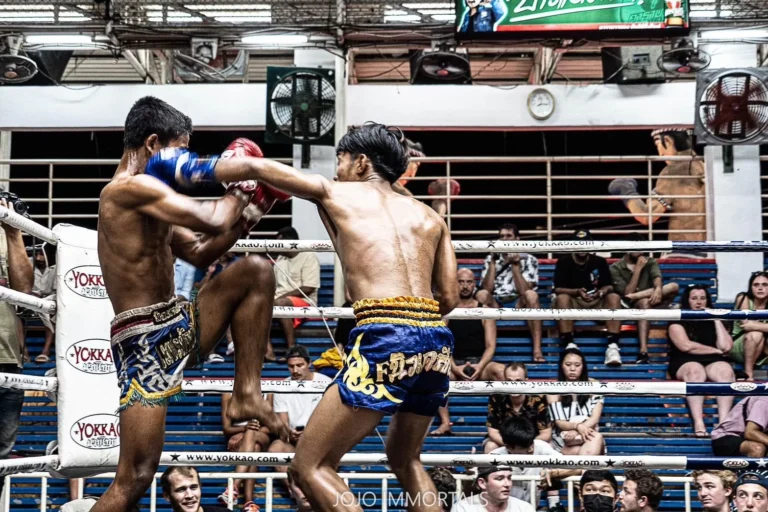
Bangkok hosts Thailand’s largest Muay Thai Day celebrations, with major events at Rajadamnern Stadium and Lumpinee Stadium showcasing elite fighters and traditional demonstrations. Special exhibition matches feature legendary retired champions demonstrating techniques that made them famous. The programming balances competitive fights with cultural education, ensuring audiences appreciate both athletic excellence and traditional significance.
Provincial celebrations occur simultaneously across all 76 Thai provinces, bringing Muay Thai Day observances to communities throughout the nation. Local stadiums and training camps organize demonstrations, workshops, and ceremonial performances accessible to residents who cannot travel to Bangkok. The decentralized approach ensures nationwide participation regardless of geographic location or economic circumstances.
Traditional ceremonies receive particular emphasis during Muay Thai Day celebrations, with extended Wai Kru performances and blessing ceremonies honoring martial lineages. Senior masters lead ritualized demonstrations showing ancient fighting styles predating modern sport adaptations. The cultural programming educates younger generations about Muay Thai’s spiritual dimensions beyond physical combat techniques.
Temple ceremonies incorporate Buddhist elements reflecting Muay Thai’s spiritual foundations. Monks conduct blessing ceremonies for fighters, equipment, and training facilities, reinforcing connections between martial practice and Buddhist principles. The religious dimension distinguishes Thai boxing from secular Western combat sports, maintaining holistic approach integrating physical, mental, and spiritual development.
Regional Celebrations & Traditions

Northern Thailand’s Muay Thai Day celebrations emphasize Muay Tha Sao style, characterized by swift footwork and agile movements suited to mountainous terrain. Chiang Mai and Chiang Rai host demonstrations showcasing regional technical variations distinguishing northern fighting approaches. Cultural performances include traditional northern Thai music and dance accompanying martial demonstrations.
Southern provinces celebrate Muay Chaiya traditions emphasizing defensive mastery and devastating counter-strikes. Demonstrations in Surat Thani and surrounding areas showcase the low, stable stances making Chaiya fighters difficult to unbalance. The technical displays educate audiences about regional diversity within Thailand’s unified Muay Thai tradition.
Northeastern (Isaan) regions honor Muay Korat heritage through powerful, aggressive fighting demonstrations. Nakhon Ratchasima province hosts major celebrations featuring the forward-pressure style characteristic of Isaan fighters. The regional variation reflects Isaan cultural values of directness and physical courage, creating distinctive fighting approach within broader Muay Thai framework.
Central Thailand’s celebrations in Lopburi province showcase balanced Muay Lopburi style incorporating elements from all regional traditions. The comprehensive approach demonstrates how modern Muay Thai synthesized regional variations into unified national martial art. Demonstrations reveal technical sophistication resulting from centuries of cross-regional exchange and refinement.
Youth Participation & Education
Schools throughout Thailand incorporate Muay Thai Day programming into physical education curricula, introducing students to national martial heritage. Educational activities include technique demonstrations, historical presentations about Nai Khanom Tom’s legend, and discussions of values embedded in martial training. The school-based approach ensures all Thai youth gain appreciation for cultural significance regardless of personal interest in competitive training.
Training camps organize open houses welcoming community members to observe professional training methods and meet fighters. The accessibility breaks down barriers between elite competitive world and general public, fostering broader appreciation for dedication required in serious martial arts practice. Young people gain exposure to potential athletic pathways while learning about disciplined training’s character-building benefits.
Youth tournaments scheduled around Muay Thai Day provide competitive opportunities for developing fighters while showcasing next generation’s talents. The events employ modified rules emphasizing technical skill over knockout power, protecting young athletes while developing proper fundamentals. Parents and community members attend, creating supportive environment encouraging youth participation in traditional martial arts.
Educational exhibitions demonstrate Muay Thai’s evolution from ancient battlefield techniques to modern sport, helping youth understand historical context. Displays of traditional equipment like hemp rope hand wraps contrast with modern boxing gloves, illustrating adaptations while maintaining essential character. The historical perspective teaches how traditions evolve while preserving core values and cultural identity.
Cultural Significance & National Pride
Muay Thai as Living Heritage
Muay Thai embodies Thai cultural values of respect, discipline, and spiritual awareness in ways few other cultural expressions achieve. The mandatory Wai Kru ceremony before every fight demonstrates respect transcending competitive rivalries. Fighter conduct reflects on family, gym, and community, creating accountability extending beyond individual achievement. These cultural dimensions distinguish Muay Thai from purely athletic pursuits, making it vehicle for transmitting Thai values across generations.
The martial art’s preservation despite modernization pressures demonstrates Thai commitment to cultural authenticity. While adopting Western boxing elements like gloves and timed rounds, essential Thai characteristics remain protected. The balance between adaptation and preservation shows cultural confidence allowing beneficial changes while defending core identity against homogenizing global forces.
International practitioners traveling to Thailand seeking authentic instruction validate the nation’s role as Muay Thai’s spiritual home. The pilgrimage aspect creates soft power benefits as foreigners develop deep appreciation for Thai culture through martial arts immersion. Many international students become cultural ambassadors, promoting Thai traditions in home countries after training experiences.
UNESCO consideration of Muay Thai for Intangible Cultural Heritage status reflects international recognition of the martial art’s cultural significance. The potential designation would formalize global acknowledgment of Muay Thai’s importance to human cultural diversity. Thai efforts supporting the nomination demonstrate strategic use of cultural heritage for national prestige and tourism development.
National Identity & International Recognition
Thai government promotion positions Muay Thai as key element in national branding strategy alongside cuisine, tourism, and traditional arts. The martial art’s global popularity provides ready-made platform for projecting positive Thai image internationally. Strategic investment in Muay Thai promotion yields returns through tourism, cultural influence, and national pride difficult to quantify but undeniably significant.
Professional Thai fighters competing internationally serve as cultural ambassadors demonstrating Thai excellence on global stages. Championship victories by Thai fighters in international promotions generate national pride while promoting Thai martial traditions. The athletic success validates Thailand’s position as producing world’s finest Muay Thai practitioners despite sport’s global spread.
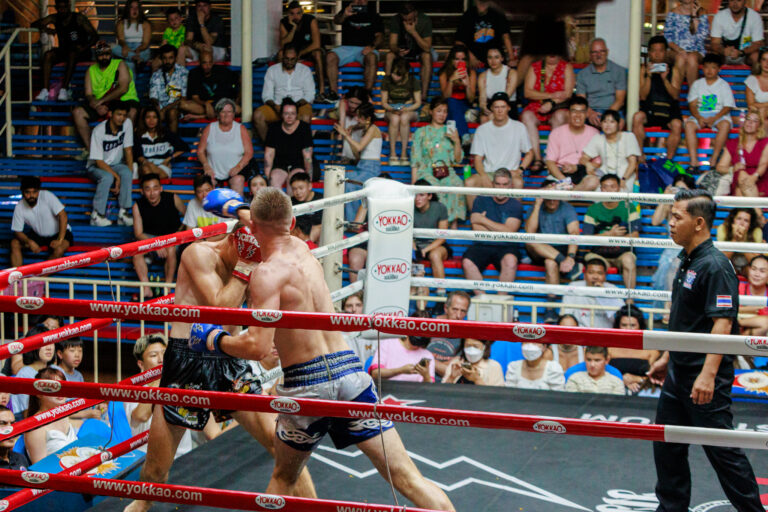
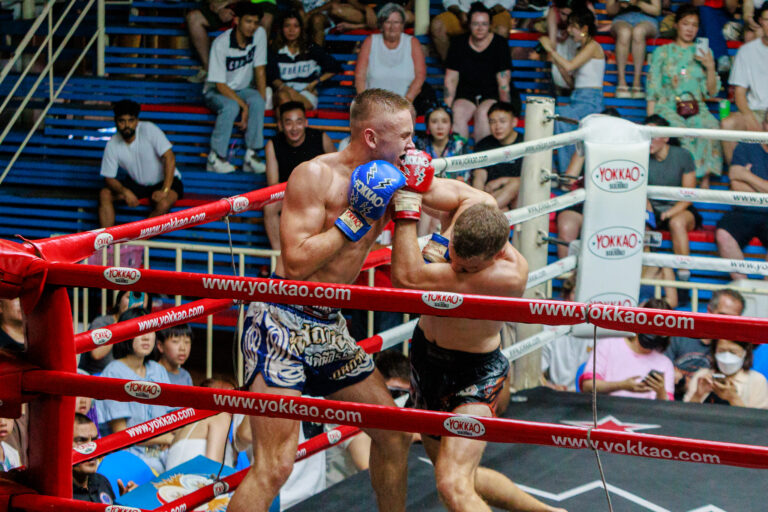
Economic benefits from Muay Thai tourism contribute substantially to Thai economy, particularly in Bangkok and Phuket where training camps and stadiums attract international visitors. Thousands of foreign students undertake intensive training in Thailand annually, supporting gyms, accommodations, and related businesses. Stadium shows provide nightly entertainment for tourists seeking authentic cultural experiences beyond typical sightseeing activities.
The martial art’s prominence in mixed martial arts validates Muay Thai’s practical effectiveness while introducing millions to Thai cultural traditions. Elite MMA fighters regularly train in Thailand, seeking authentic instruction unavailable elsewhere. This athletic validation combined with cultural authenticity creates powerful combination supporting Thailand’s soft power objectives.
Experiencing Muay Thai Day in Phuket

Special Stadium Events
Phuket’s premier Muay Thai venues enhance regular programming during Muay Thai Day week with special ceremonies and exhibition matches. Bangla Boxing Stadium hosts extended Wai Kru ceremonies featuring fighters from multiple gyms performing traditional dances. The collective ceremony creates impressive visual spectacle while demonstrating unity within Thai martial community despite competitive rivalries.
Retired champion fighters often participate in Muay Thai Day events through exhibition demonstrations or ceremonial appearances. The legends share stories and demonstrate signature techniques that defined their careers. Meeting martial arts heroes provides inspiration for developing fighters while educating general audiences about Muay Thai history through personal narratives.
Patong Boxing Stadium offers English commentary explaining Muay Thai Day’s cultural significance during special March programming. International visitors gain deeper understanding of observance meaning while witnessing enhanced ceremonial elements. The educational approach transforms entertainment into cultural learning experience appropriate for travelers seeking authentic Thai traditions.
Special matchmaking during Muay Thai Day week often features technically skilled fighters in bouts emphasizing artistry over pure aggression. The matchups showcase Muay Thai at its technical finest, demonstrating sophisticated skills developed through years of dedicated training. These artistic displays provide different perspective from typical knockout-focused entertainment, revealing depth in traditional martial art.
Traditional Ceremonies & Performances

Enhanced Wai Kru ceremonies during Muay Thai Day incorporate elements sometimes abbreviated in regular shows. Full traditional music performances accompany extended Ram Muay dances, creating immersive cultural atmosphere. The ceremonies educate international audiences about spiritual dimensions often overshadowed by physical combat aspects in Western presentations.
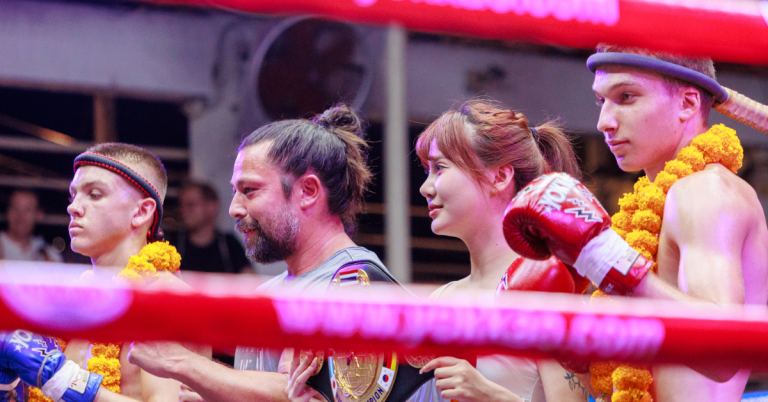
Mongkol blessing ceremonies conducted by monks add religious solemnity to Muay Thai Day observances. The sacred headbands receive special blessings during annual celebrations, renewing spiritual protection for fighters wearing them into competition. Witnessing these authentic religious practices provides insight into Muay Thai’s integration with Buddhist culture impossible to fully appreciate without direct observation.
Traditional Sarama music receives special attention during Muay Thai Day, with master musicians demonstrating techniques passed through family lineages for generations. The live performances showcase Pi Java oboe’s haunting melodies and Klong Khaek drums’ driving rhythms at highest artistic level. Musical virtuosity becomes clear when master performers demonstrate, revealing sophistication casual observers might miss during typical stadium shows.
Cultural demonstrations between fights may include traditional dance, martial arts weapon demonstrations, or historical reenactments. These supplementary performances provide context for Muay Thai’s position within broader Thai martial and cultural traditions. The comprehensive programming creates complete cultural experience rather than isolated sporting event.
Year-Round Muay Thai Experiences

Beyond Annual Celebrations
While Muay Thai Day provides special observance, authentic traditional elements occur at quality stadiums throughout the year. Daily shows at Phuket’s premier venues maintain cultural standards ensuring visitors experience genuine Thai martial traditions regardless of travel dates. The consistent quality allows travelers to witness authentic Muay Thai without timing visits to coincide with specific annual celebrations.
Professional fighters train year-round in preparation for regular competition schedules, providing continuous opportunities to observe serious athletic preparation. Training camp visits reveal dedication required for professional fighting careers while demonstrating traditional teaching methods passed through generations. The behind-scenes access complements stadium show attendance, providing complete picture of Muay Thai culture.
Authentic Muay Thai experiences remain accessible seven nights weekly in Phuket’s professional stadiums, featuring traditional ceremonies and competitive fights between skilled athletes. The regular programming maintains cultural standards while providing reliable entertainment for international visitors. Consistent authenticity distinguishes legitimate venues from tourist shows offering choreographed entertainment lacking genuine martial spirit.
Traditional Wai Kru ceremonies occur before every professional fight regardless of season or special observance. The mandatory ritual demonstrates ongoing commitment to cultural practices rather than performing traditions only during designated celebrations. This consistent maintenance of cultural elements throughout the year reflects Thai boxing’s living tradition status rather than museum-piece preservation.
Conclusion
Muay Thai Day celebrates Thailand’s most significant martial art and cultural export through nationwide festivities honoring centuries of tradition. While Thailand observes two official Muay Thai Days—February 6th honoring King Sanphet VIII and March 17th commemorating Nai Khanom Tom—the March date remains more widely celebrated as the primary National Muay Thai Day. The observance combines competitive sport, cultural education, and national celebration, reinforcing Muay Thai’s central position in Thai identity.
While Muay Thai Day provides enhanced ceremonial elements, authentic traditional practices continue year-round at quality venues maintaining cultural standards. Phuket’s professional stadiums offer consistent access to genuine Thai martial traditions through nightly shows featuring legitimate competition and traditional ceremonies. The reliable authenticity enables travelers to experience living cultural heritage regardless of visit timing.
Experience authentic Thai martial traditions at Phuket’s premier venues presenting professional Muay Thai with traditional ceremonies and cultural reverence. Bangla Boxing Stadium hosts nightly professional fights featuring traditional Wai Kru ceremonies and skilled competitive bouts. Patong Boxing Stadium provides similar authentic presentations with English commentary explaining cultural significance. Book tickets directly for guaranteed seating and 5% discount at either venue, ensuring access to Thailand’s living martial heritage.