
Global search trends show hundreds of spelling variations—mui thai, mui tai, muiy thai—each representing genuine attempts to capture Thai sounds unfamiliar to Western ears. This guide breaks down correct pronunciation using Thai phonetics and explains why proper terminology matters in Thailand’s national sport.
The Correct Pronunciation of Muay Thai
Correct pronunciation: “Moo-ay Tie” (three syllables)
Phonetic Breakdown: “Muay” (มวย)
Two syllables: “Moo-ay”
- “Moo”: Long vowel like “food” or “mood”—hold steady without diphthong gliding
- “ay”: Sounds like “say” or “day”—distinct second syllable
- Tone: Mid tone—level pitch throughout both syllables
Common mistake: English speakers compress into one syllable (“mwy”), fundamentally changing the word’s structure in Thai.
Phonetic Breakdown: “Thai” (ไทย)
Single syllable: “Tie”
- Rhymes with “pie,” “my,” “sky”
- Thai consonant ท produces aspirated “t”—air releases distinctly
- NOT “Thigh” (leg) or “Tay” (rhymes with “day”)
- Tone: Mid tone—steady pitch without rising or falling
Complete Pronunciation
- Total syllables: Three (Moo-ay-Tie)
- Stress pattern: Equal stress across all syllables
- Rhythm: Evenly paced
- Tone: Level pitch maintained throughout
Understanding Thai Tones
Thai has five tones that change word meanings entirely:
- Mid tone: Level pitch (มวย “muay”, ไทย “thai”)
- Low tone: Below natural pitch, stays low
- Falling tone: Starts mid, falls sharply
- High tone: Rises and stays high
- Rising tone: Starts low, rises
Critical difference: English uses intonation for emphasis. Thai uses tones to distinguish word meanings.
Example: “Mai” means five different things based on tone:
- ไม่ (falling): “not”
- ใหม่ (rising): “new”
- ไม้ (high): “wood”
- ไหม้ (falling): “burn”
- ไหม (rising): question particle
Most Common Muay Thai Misspellings
“Mui Thai” vs “Muay Thai”
The most common misspelling globally. English spelling patterns suggest “ui” for the “oo-ay” sound (like “fruit,” “suit”). However, this loses Thai’s two-syllable structure entirely.
Professional Muay Thai organizations standardized “Muay Thai” spelling by the 1990s, aligning with Royal Thai General System of Transcription.
“Thai Boxing” as Alternative
Completely acceptable alternative. While “Muay Thai” carries deeper cultural significance connecting directly to Thai heritage, “Thai Boxing” serves as accurate English translation for international audiences.
Complete List of Common Variations
These variants appear in millions of annual searches: mui thai, mui tai, muay tai, muai tai, mau tai, mauy tai, mua thai, muah tai, muy thai, muey tai, moy thai, muiy thai, mui tie, mui tay, moi tai, moi thai, mo tai, muah thai, muat thai, miay thai, moitai, muau thai, mau thai, muoy thai, muya thai, mui ti, mui tia, muitai, muay tha, muay thay, tai boxing
Note: The only correct English spelling remains “Muay Thai.”
Thai Numbers for Martial Artists
Essential numbers 1-10 for counting rounds:
- หนึ่ง (neung) – “Nung” – low tone
- สอง (sawng) – “Song” – rising tone
- สาม (saam) – “Sam” – rising tone
- สี่ (see) – “See” – falling tone
- ห้า (haa) – “Ha” – falling tone
- หก (hok) – “Hok” – low tone
- เจ็ด (jet) – “Jet” – low tone
- แปด (paet) – “Paet” – low tone
- เก้า (kao) – “Kao” – falling tone
- สิบ (sip) – “Sip” – low tone
Thai trainers count techniques during pad work using these numbers. Understanding them enhances training comprehension.
Essential Muay Thai Terminology
Fundamental techniques:
- Jab (หมัด, “Mat”): Punch – single syllable, short “a”
- Kick (เตะ, “Teh”): Kicking action – short, clipped
- Knee (เข่า, “Kao”): Knee strikes – long vowel
- Elbow (ศอก, “Sok”): Elbow strikes – hard “k” ending
- Clinch (จับ, “Jap”): Grappling – abrupt stop
Cultural ceremony terminology:
- Wai Kru (ไหว้ครู, “Why Kroo”): “Respect to teacher” – pre-fight ceremony
- Ram Muay (รำมวย, “Rum Moo-ay”): “Boxing dance” – ritual performance
- Mongkol (มงคล, “Mong-kon”): Sacred headband
- Prajioud (ประเจียด, “Pra-jiat”): Sacred armbands
Essential gym commands:
- Chok (ชก): “Strike/Fight” – rising tone
- Yut (หยุด): “Stop” – low tone
- Pai (ไป): “Go” – mid tone
- Dee (ดี): “Good” – mid tone
- Mai dee (ไม่ดี): “Not good” – falling + mid tone
Cultural Significance of Correct Pronunciation
Muay Thai evolved over centuries as Thailand’s battlefield combat system and cultural tradition. Correct pronunciation acknowledges this heritage. Thai nationals notice pronunciation details—proper pronunciation creates immediate rapport and signals genuine respect beyond tourist-level engagement.
International Muay Thai organizations standardized “Muay Thai” pronunciation across professional contexts. Professional fighters worldwide use correct pronunciation as standard practice, maintaining cultural authenticity in international contexts.
Learn Pronunciation Through Live Experience
Authentic cultural immersion accelerates pronunciation mastery beyond textbook learning.
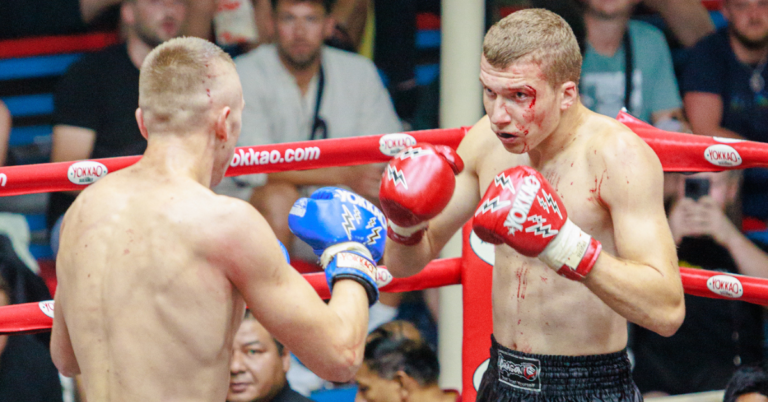
Live Muay Thai events create natural language learning environments. Native Thai ring announcers demonstrate perfect pronunciation during fighter introductions. Traditional Wai Kru ceremonies showcase correct terminology in sacred cultural context.
Authentic Muay Thai Cultural Experience:
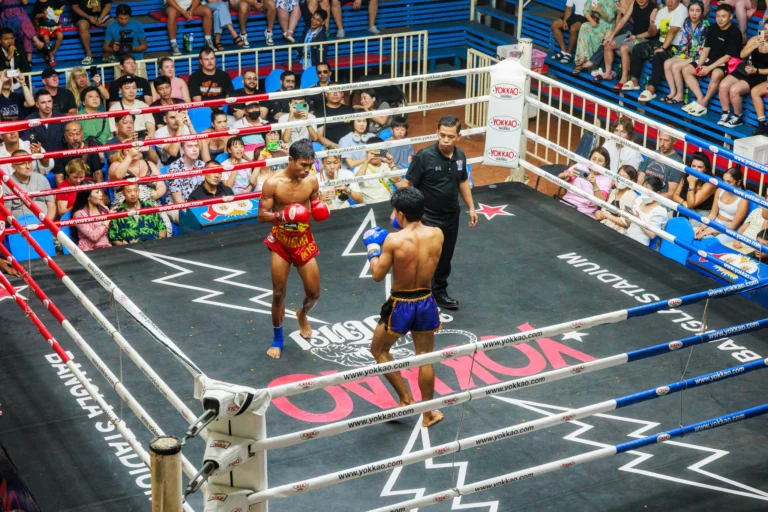
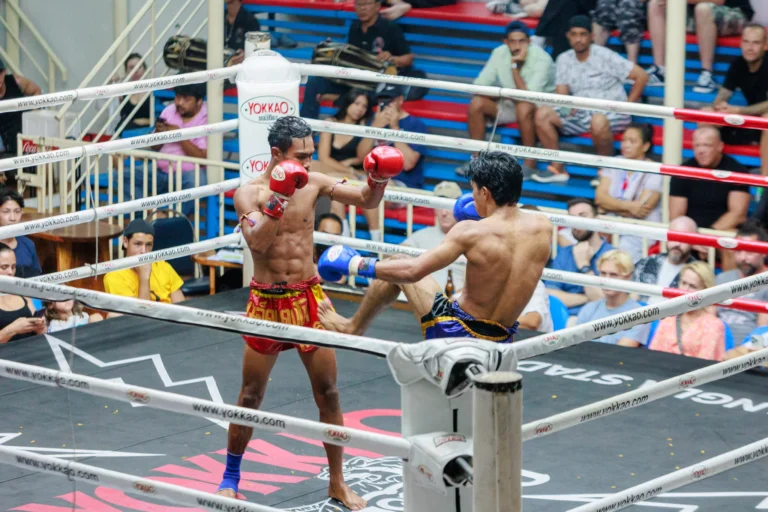
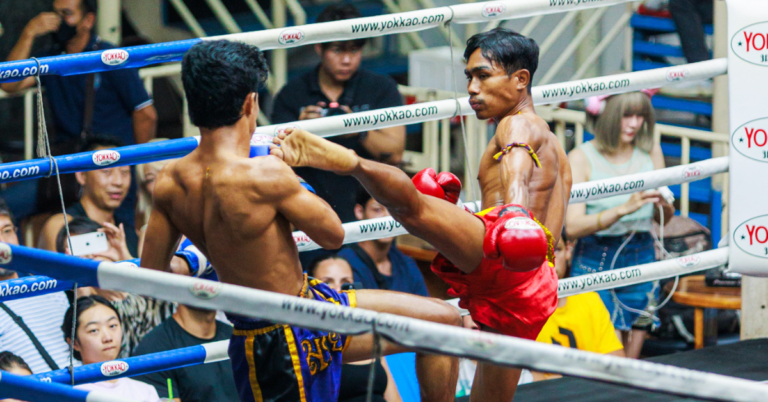
Bangla Boxing Stadium Tickets – HKT Boxing Stadium’s official venue behind Jungceylon in Patong. Professional fighters compete nightly with traditional Wai Kru Ram Muay ceremonies at 9:00 PM. Native Thai announcers provide authentic pronunciation examples throughout eight professional matches.
Stadium features:
- Evening shows seven days weekly (MMA & Kickboxing Saturdays)
- Traditional ceremonies with correct Thai terminology
- Native Thai commentary for pronunciation reference
- Free t-shirt included with all tickets
Patong Boxing Stadium Tickets – Sainamyen Road location hosts nightly professional Muay Thai (except Sundays). English commentary explains cultural elements while maintaining Thai terminology pronunciation.
Stadium features:
- English commentary with proper Thai term pronunciation
- Traditional ceremonies maintaining authenticity
- Eight professional matches nightly
- Family-friendly atmosphere
Discover Cultural Muay Thai Experiences – Compare Phuket’s premier Muay Thai venues and access authentic Thai martial arts experiences.
Cultural Language Benefits:
Pronunciation acquisition:
- Hear correct “Muay Thai” pronunciation hundreds of times per event
- Learn traditional vocabulary from native speakers naturally
- Understand tonal variations in authentic context
- Experience ceremonial language during Wai Kru rituals
Practical learning:
- Visual context (seeing techniques while hearing terminology) enhances retention
- Repeated exposure throughout evening reinforces memory
- Entertainment value maintains engagement
Book directly through hktboxingstadium.com and receive 5% discount on all tickets. Bangla Boxing Stadium offers the complete cultural experience with free t-shirt included, while Patong Boxing Stadium provides family-friendly English commentary.
Master pronunciation through authentic cultural immersion. Professional Muay Thai events create ideal environments where traditional ceremonies, native Thai speakers, and martial arts excellence combine for comprehensive language learning.